Florr.io Loadout Guide
This guide is about petal slots, roles, and swapping loadouts for different biomes and goals.
Slots and roles
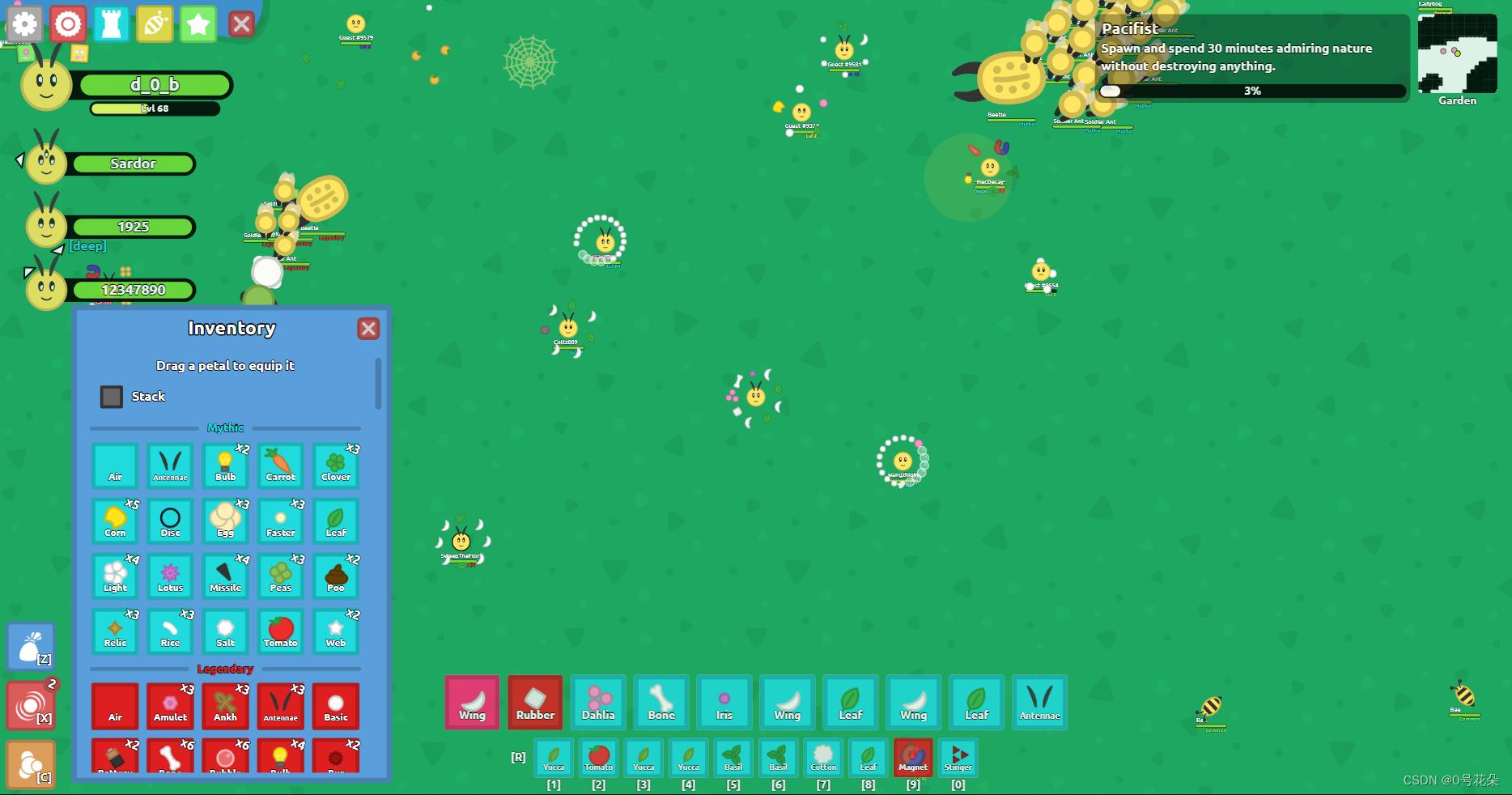
You have a limited number of petal slots, so you have to consider each slot as its own role: primary damage, secondary damage, healing, utility, and mana generation if necessary. Overloading on a specific role could leave you weak when you require any of the other roles; A typical balanced mid game set might have 3-4 damage petals, 1-2 heal/sustain, and 1 utility or special petal.
Damage types
Contact petals, projectiles, lightning, and multi-hit petals all clear packs in different ways. Contact petals are good for positioning, whilst projectiles are necessary for range, and multi-hit petals come in play when you have enemies clumped together. Therefor, it is best to mix up your types so you can use each type and not be caught in a situation where a specific style is hard to use.
Healing and survival
Healing petals and other sustain tools significantly increase effective farming time. A decent heal petal is often more valuable than an extra damage petal if you die every few packs; Armor, body-damage reduction, and mobility tools further reduce your chance of dying.
Mana and magic petals
Mana Orbs and associated petals increase your maximum mana and regeneration, and can unlock different varieties of magic petal effects from certain mobs. Magic loadouts are very powerful, but drain mana rapidly; Either combine them with mana regenerating petals or take breaks between intense spells. If you're not using magic petals, it is best to focus on damage or healing abilities.
Biome-specific swaps
The Garden and other open areas favour generalist damage, whilst Denser Ant Hell packs favour area and multi-hit. The Hel requires higher sustain and durability while the Ocean and projectile areas favour range and control. You should always keep a mental or written note of 1 to 2 alternative petals to use when switching areas.
Super and Unique pings
When a high value spawn gets pinged, you might not have time to fully re-equip. Therefor, you should always keep a "contest" loadout, where you have enough damage to contribute, but enough healing to not die instantly.
Related: Strategy Tips, Petals Overview, Biomes, Beginner Guide.